
Tar Spot Management
Tar Spot, a foliar disease caused by the fungus Phyllachora maydis, has become an increasing concern for corn growers in the Midwest since its emergence in the U.S. in 2015. Initially considered minor, severe outbreaks in 2018 revealed its potential to significantly impact yields. The disease thrives in cool, humid conditions with prolonged leaf wetness and has been confirmed across several states, including Ohio.
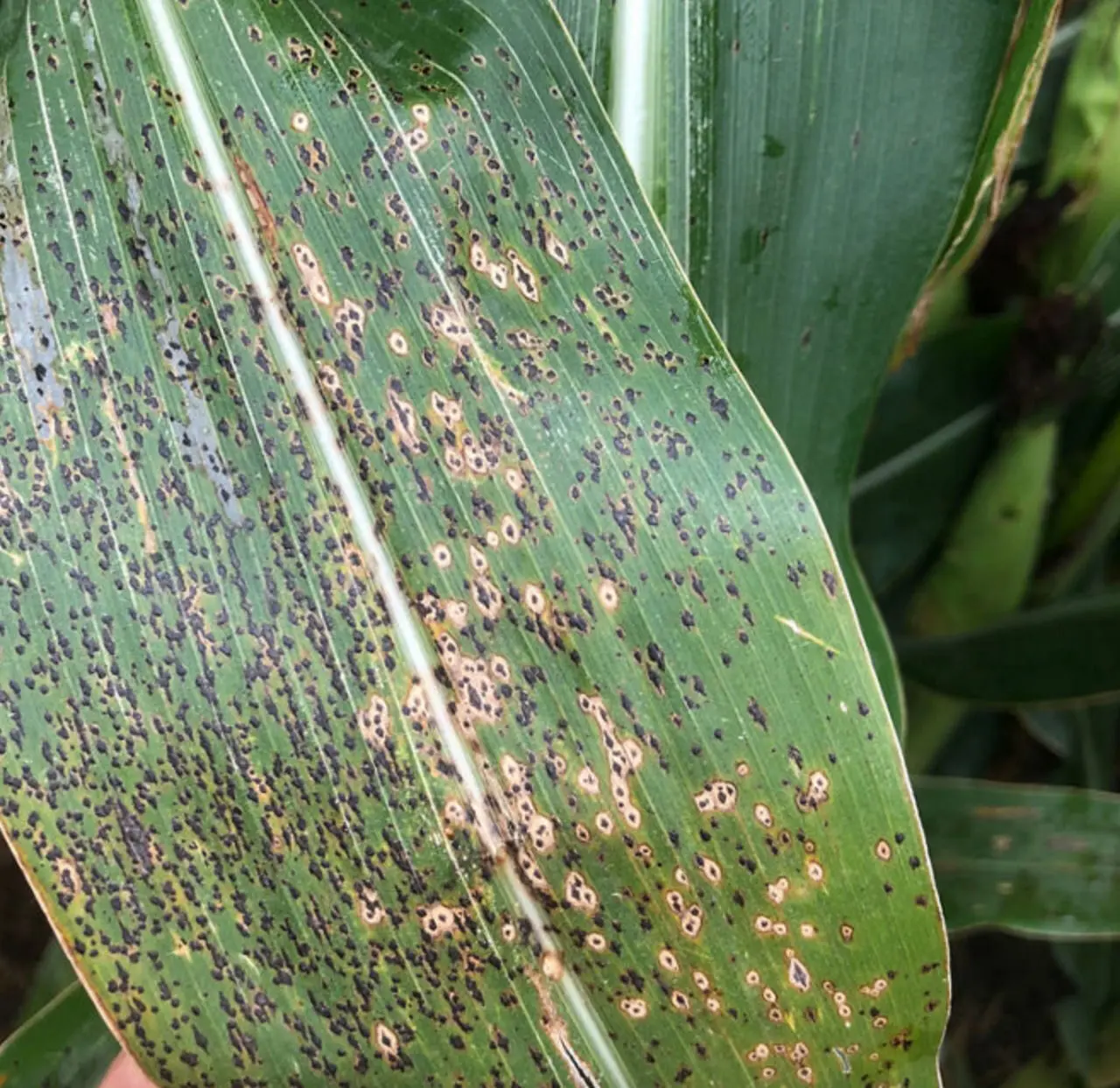
Symptoms include small, raised black spots on leaves, sometimes surrounded by tan to brown lesions known as “fisheye” lesions. These lesions can coalesce, leading to extensive leaf blight and reduced photosynthetic capacity, ultimately affecting grain fill and yield.
Bayer’s Delaro® Complete Fungicide, featuring three modes of action, has demonstrated effectiveness in managing Tar Spot. University trials in 2021 showed that application at the R1 growth stage provided significant yield protection compared to untreated fields and other fungicides. Optimal disease management involves early and continuous scouting, especially in areas with a history of Tar Spot, and timely fungicide applications based on disease pressure.
For more detailed information, visit Bayer’s article on Delaro® Complete against Tar Spot.
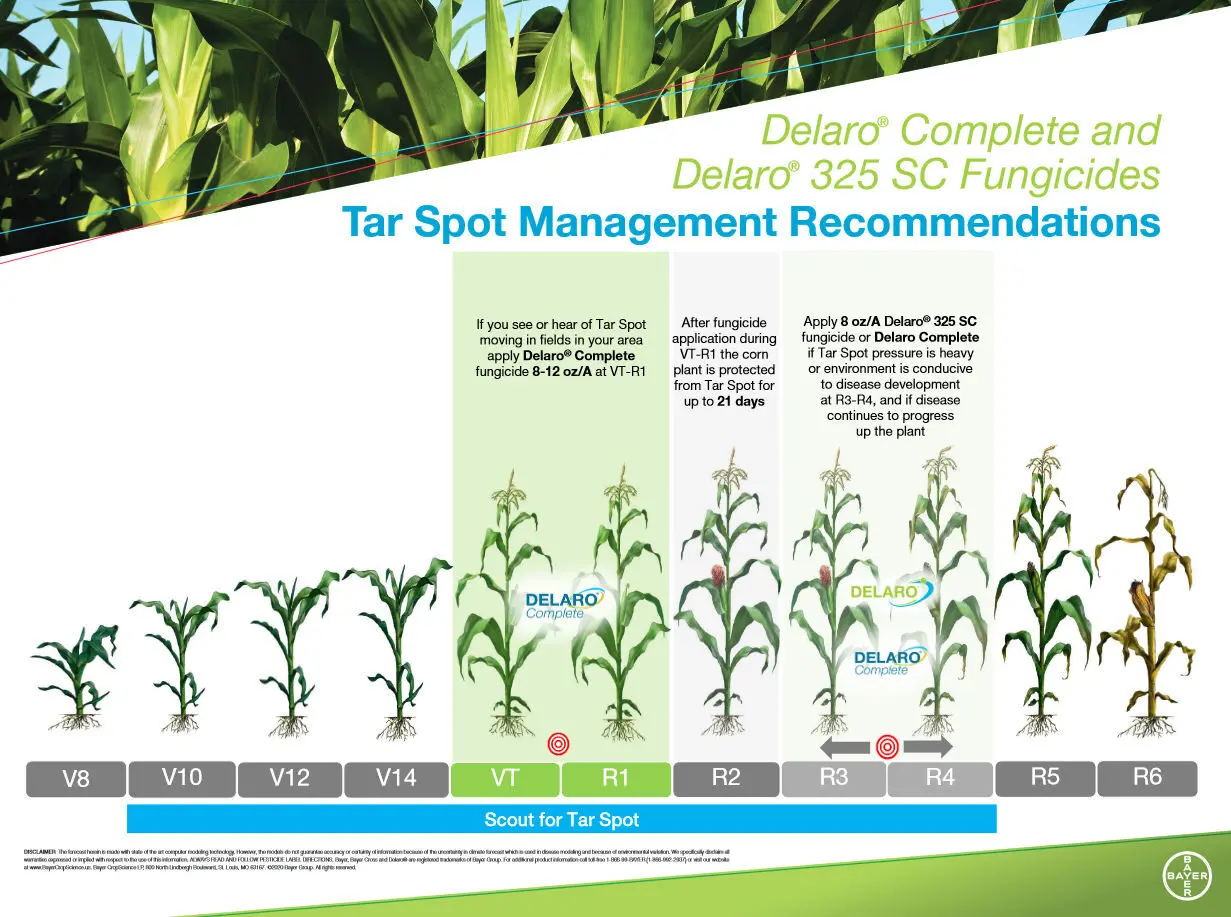
Application Recommendations for Tar Spot
Source: Bayer CropScience
Seed Production Fungicide & Insecticide Recommendations
Fungicide


Insecticide
